
An American’s guide to understanding the most connected country on earth
“The Barenaked Ladies’ hit song ‘One Week‘ says ‘It’s been one week since you looked at me.’ I’m five months into my time in India and for some reason this song keeps playing in my head. My trip through Rajasthan took longer than a week, I was sick for longer than a week, and my girlfriend and I have been broken up for longer than a week. Not to mention I set my writing aside for more than a week.
I’m back in Rishikesh now and I can’t stop thinking about time. Many people say that India moves slowly and that getting around can take a while. Now that I have Indian friends and I’m shedding my American tendencies and diet, I’m starting to see why things take time — and it’s not what you think.
I walk around and see many foreigners rushing from place to place looking for that next India dopamine hit. I hang out with my Indian friends and we actually laugh at some of the other foreigners. We are in such a rush — always! We are very driven to accomplish the 100 things we’ve planned. We’ve got our excursions, cafes, yoga and itinerary all mapped out and we get thrown off when things don’t go our way. In America we have the illusion of controlling our own time.
I’ve figured it out. I know why things in India take time and happen as they should. With over a billion people, the country of India is incredibly connected. No artificial intelligence can understand the emotional intelligence of an Indian — let alone an entire country. It is against their nature to pass by someone who needs help. I’m not talking about street people or foreigners. The type of help I’m talking about is between regular, everyday people of India. They love their families and they love each other. Many calls are made throughout the day which takes time. Mom, dad, sister, brother, significant other or friend — sometimes all in one day. Jeez, aunty had a lot to say.
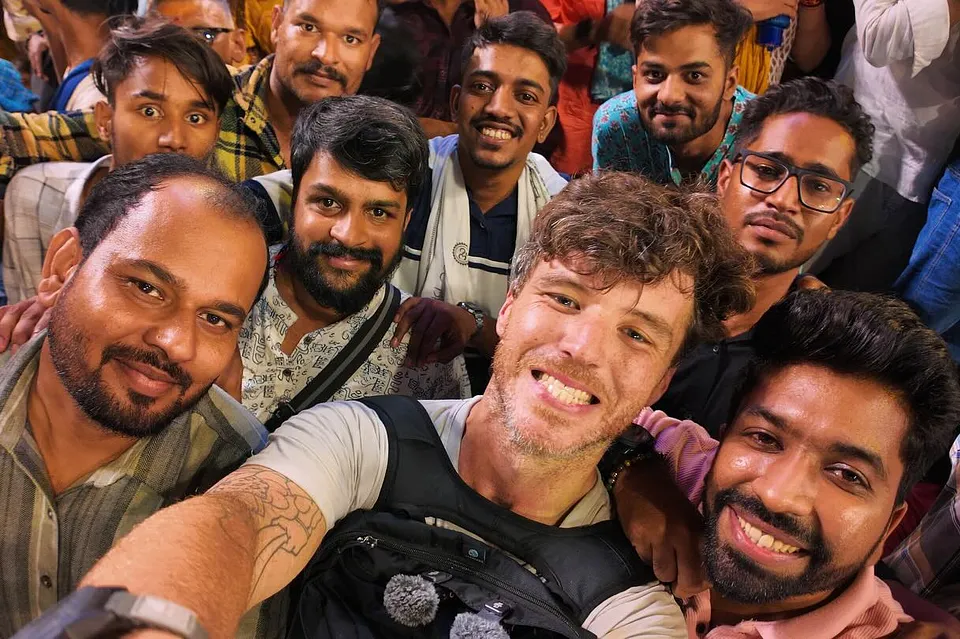
When stepping out into the street someone may need WiFi to pay their bill. One of my Indian friends will stop and give their time to help. Maybe a friendship is made and numbers are exchanged. This takes time too. Some people actually need to know the time because their phone died — if you have a power bank, you will offer it. It’s just an Indian custom. I’ve met Kashmiris in Srinagar so kind and sweet they would spend their last dollar on you to make sure you were okay. Indians treat foreigners like gods, but through my American eyes I think they also treat each other like gods.

If you’re reading this and you’re a Westerner like me — I implore you to remember that if your bus is late or something isn’t going your way, it’s likely because an Indian stopped to help someone else. Let’s say a car needs to clear out of a busy lane. It may take 2 police officers, the driver, the uncle in the backseat, 2 guys on a scooter and 3 guys on motorcycles to accomplish this. The thing is — it’s all good, because everyone helped and things got sorted.
I’m starting to understand Hindi and my biggest insight is that there is constant communication and feedback. When the universe was formed, people from ancient times say it made the sound of ‘Om.’ When Indians speak to each other there is a consistent feedback loop of sounds to let the other person know you’re engaged. We Westerners do a good thing and feel good about ourselves. It’s been incredible to see the lengths my Indian friends will go for each other — expecting nothing in return. Many acts foreigners would consider noble, Indians see as customary.
Time in India has nothing to do with being on time or being late. India is an open and ever-changing dialogue. Just as AI still needs a human prompt and is only as smart as the person using it — India will work or not work for you depending on the type of human you are. You can only collect $200 and pass Go, Monopoly-style, if you’re willing to play. You only receive what you put in. Our tendency in the West is consumption and giving when things feel right. The tendency in India is the art of giving with a pure heart — even when it doesn’t make sense.